The Ultimate Guide to Cash Flow Forecasting (Without the Spreadsheet Headaches)
Let's talk about the thing that keeps most business owners up at night: Will I have enough cash to cover next month's expenses?
If you've ever stared at a bank balance at 11 PM wondering whether you can afford that next hire, you're not alone. Cash flow forecasting sounds like one of those "big company" things that requires a finance degree and a color-coded spreadsheet the size of a small novel.
Spoiler alert: It doesn't have to be that way.
We're going to walk you through cash flow forecasting in a way that actually makes sense, no spreadsheet nightmares, no drowning in formulas, and definitely no MBA required. Just practical insights that help you sleep better at night.
Why Cash Flow Forecasting Actually Matters (Beyond the Obvious)
Sure, everyone knows you need to "manage your cash." But cash flow forecasting isn't just about avoiding overdraft fees, it's about making better decisions with confidence.
Here's what a solid forecast actually does for you:
Tells you when you can afford to grow. Want to hire someone? Invest in new equipment? A good forecast shows you exactly when you'll have the breathing room to make those moves.
Helps you spot trouble early. Instead of discovering you're short on cash when bills are due, you see it coming weeks in advance and can actually do something about it.
Makes conversations with banks or investors way easier. Nothing builds credibility like showing someone you know exactly where your money's going.
Reduces that constant low-level anxiety. When you know what's coming, you can focus on running your business instead of worrying about it.
The goal isn't perfection, it's visibility. You want to see around the corner before you hit it.
The Numbers That Actually Matter
Let's strip away the complexity and focus on what you really need to track. Think of cash flow forecasting as answering three simple questions:
1. What money is coming in?
This is your cash inflow, and it's more than just "sales." You're tracking:
Revenue from customers (when they actually pay you, not when you invoice them)
Collections from any outstanding invoices
Investment income or interest
Any loans or outside funding
The key word here is "when." A $50,000 sale in January that doesn't get paid until March is a March number, not a January one.
2. What money is going out?
Your cash outflow includes all the usual suspects:
Operating expenses (rent, utilities, software subscriptions)
Payroll and contractor payments
Supplier and vendor bills
Loan repayments
Any major purchases or investments
Again, timing is everything. If your biggest supplier gives you Net 30 terms, that expense hits 30 days after the invoice, not the day you receive the product.
3. What's left over?
This is your net cash position, the difference between what came in and what went out. If it's positive, you're good. If it's negative, you need a plan. Simple as that.
Matching Your Forecast to Your Timeline
Here's where most people get overwhelmed: they try to forecast everything at once. The secret? Different timelines need different approaches.
Short-term (2-4 weeks): The "What's Actually Happening" View
For the next few weeks, you want precision. Look at your actual accounts receivable and accounts payable. Who owes you money? When are they likely to pay? What bills are due and when?
This is your "keep the lights on" forecast. It's tactical, specific, and based on real transactions that are already in motion.
Medium-term (13 weeks): The "Strategic Planning" View
At this range, you're thinking about bigger decisions. Do you have enough cash to make payroll next month and the month after? Can you afford to increase inventory before your busy season?
Here, you're working with reasonable assumptions based on patterns you've seen before. You know roughly how much revenue to expect and what your expenses typically look like.
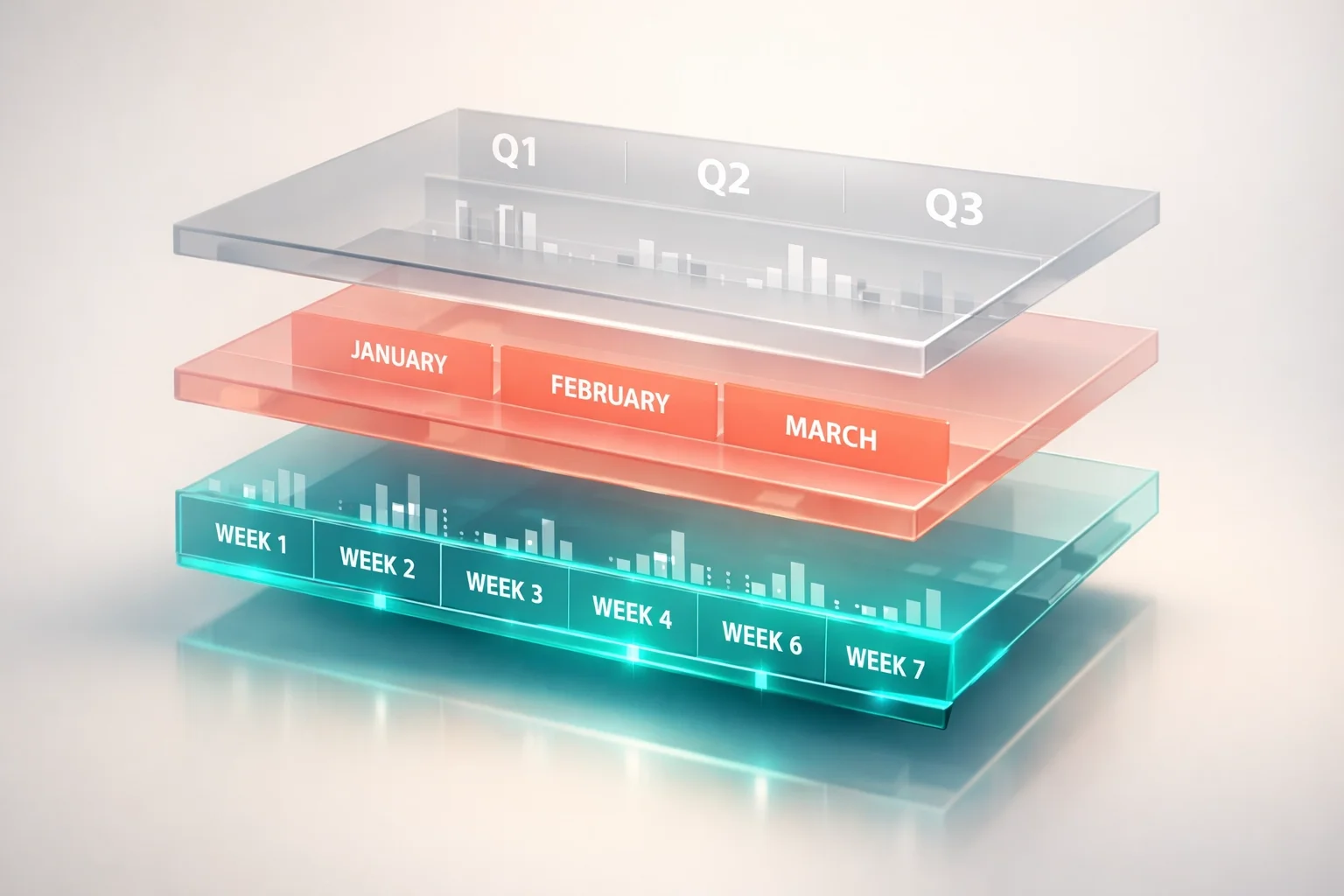
Long-term (6-12 months): The "Big Picture" View
This is where you're thinking about growth, major investments, and strategic moves. You're using your budget and business goals to project where you want to be, not just where you're headed if nothing changes.
Long-term forecasts are less about precision and more about direction. You're asking, "If we want to double revenue by year-end, what does our cash situation need to look like to support that?"
The Practices That Actually Work
Forget the theory, here's what makes forecasting useful in real life.
Start with what you know, not what you wish
Your best forecasting tool is your own history. Look at the last 6-12 months. When do customers typically pay? When do you have seasonal spikes or dips? What patterns keep showing up?
Use that data as your baseline, then adjust for anything you know is changing (like a big new client or a planned expansion).
Get specific about the big stuff
If 80% of your revenue comes from five major clients, don't just lump them into a general "revenue" line. Model each one separately. Know when their contracts renew, when they typically pay, and what happens if one of them is late.
The same goes for major expenses. Your biggest supplier, your payroll, your rent, these deserve individual attention in your forecast.
Update it regularly (or it becomes fiction)
A forecast you made three months ago and never touched again is basically creative writing. The world changes, deals fall through, opportunities pop up, your forecast needs to reflect reality as it evolves.
We recommend reviewing and updating at least monthly, if not more often for short-term forecasts. It takes 20 minutes and saves you from surprises.
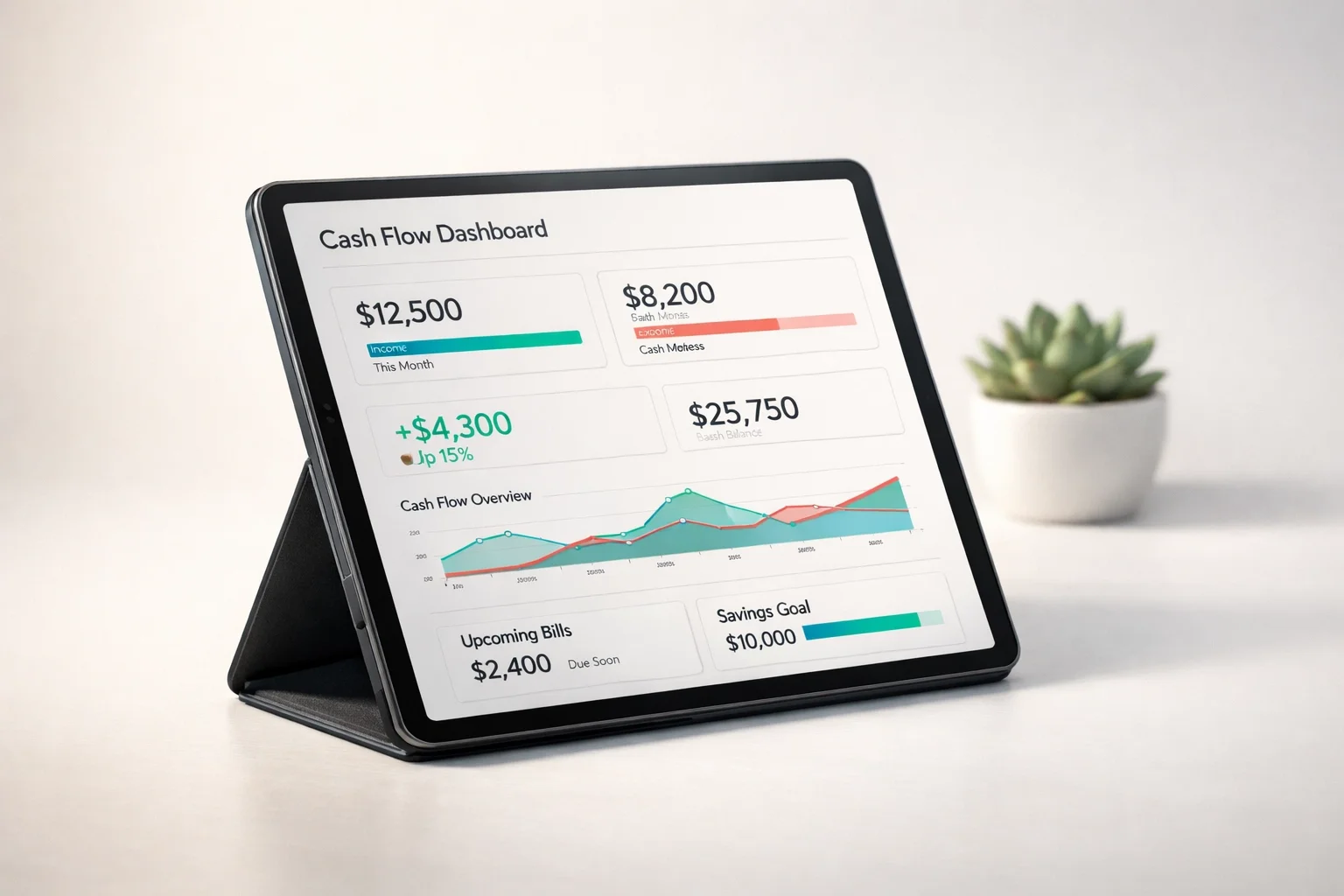
Run scenarios, not just one prediction
Don't just forecast what you think will happen, forecast what could happen. What if your biggest client pays 30 days late? What if that new contract comes through ahead of schedule? What if you need to replace a major piece of equipment?
Having a "best case," "expected case," and "worst case" scenario helps you prepare for reality instead of being blindsided by it.
Why Spreadsheets Eventually Let You Down
Look, we're not anti-spreadsheet. They're fine for getting started. But here's what happens as you grow:
They break. One wrong formula, one deleted cell, and suddenly your entire forecast is wrong, and you might not even know it.
They're slow. Want to update your assumptions? Hope you enjoy clicking through dozens of cells and hoping you didn't miss one.
They don't talk to anything else. Your accounting software has all the data you need, but you're manually typing it into a spreadsheet like it's 1997.
Nobody else can use them. If you get hit by a bus, does anyone in your company know how your spreadsheet works? (Please don't test this.)
Modern tools exist specifically to solve these problems: they pull data automatically, update in real-time, and let you run scenarios with a few clicks instead of a few hours.
The Tools That Make This Actually Manageable
You don't need enterprise-level software to do this right. Here's what actually helps:
Connect your data sources. The best forecasting happens when your tools talk to each other. Link your accounting software, your bank accounts, and your invoicing system so data flows automatically instead of living in silos.
Use technology that learns. AI-powered tools can spot patterns you'd miss and adjust forecasts based on what actually happens versus what you predicted. It's like having a really smart assistant who never gets tired.
Get real-time visibility. Static forecasts are dead on arrival. You want a living, breathing view of your cash position that updates as transactions happen, not once a month when you finally get around to updating your spreadsheet.

Getting Started Without Losing Your Mind
If you're reading this thinking, "This sounds great but I have no idea where to start," here's your game plan:
Week 1: Gather your data. Pull the last six months of bank statements, invoicing records, and expense reports. You're looking for patterns: when does money come in? When does it go out? What's consistent and what's variable?
Week 2: Build your baseline. Create a simple forecast for the next 4 weeks using actual invoices and bills you know are coming. Don't worry about being fancy: just map out the cash you're certain about.
Week 3: Extend your view. Add another 8-12 weeks based on your historical patterns. If you typically bring in $X in revenue per month and spend $Y, start there and adjust for anything you know is different.
Week 4: Review and refine. At the end of the month, compare what you forecasted to what actually happened. Where were you close? Where were you way off? Use that to improve next month's forecast.
The first forecast is always the hardest. Each one after that gets easier because you're building on what you learned.
When to Call in Reinforcement
Here's the honest truth: some businesses reach a point where DIY forecasting isn't enough. If you're dealing with multiple revenue streams, complex payment terms, inventory management, or you're trying to raise capital, you probably need help.
That's where fractional CFO services come in. We help businesses build forecasting systems that actually work: not theoretical frameworks that look good in a textbook, but practical tools you can use to make real decisions.
We handle the complexity so you can focus on the insights. No spreadsheet headaches, no formulas that break at 2 AM, just clear visibility into where your cash is going and when you'll have it.
The Bottom Line
Cash flow forecasting isn't about creating the perfect model: it's about seeing what's coming so you can make better decisions today. Start simple, stay consistent, and don't let the perfect be the enemy of the good.
You've got this. And if you don't? We're here to help.