Closing Out a Prior Year: Why It Matters More Than You Think

We’ve all been there. It’s mid-July, the sun is out, and your business is moving at a million miles an hour. You’re looking at your current month’s revenue, trying to figure out if you can afford that new hire or that marketing push. But in the back of your mind, or buried in your QuickBooks, there’s a lingering ghost.
It’s the "Prior Year."
Maybe it’s a handful of unreconciled transactions from last November. Maybe your CPA filed your taxes based on "preliminary" numbers because you were in a rush, and you promised to "clean it up later." Well, "later" has arrived, and for many founder-led businesses hitting that $5M, $10M, or $15M mark, those open books are more than just a nuisance. They are a silent tax on your growth.
At Metric CFO, we see this all the time. Carrying an open prior year into the current one isn’t just about being "behind on paperwork." It’s about the downstream effects that compound every single month.
In this post, we’re going to talk about why closing the books properly, and doing it now, matters more than you think. No jargon, just a straight-up look at how this affects your bottom line and your sanity.
The Trap of "Good Enough" Accounting
When you’re a smaller shop, you can sometimes get away with "good enough" accounting. You know roughly what’s in the bank, you know who owes you money, and your tax return gets filed eventually.
But as you scale toward $15M in revenue, the margin for error shrinks. "Good enough" starts to look like:
Filing tax returns that don't actually match your ledger (hello, audit risk).
Making hiring decisions based on profit margins that aren't actually accurate.
Paying your CPA or a clean-up crew double or triple the normal rate because they have to reconstruct a year’s worth of data in a panic.
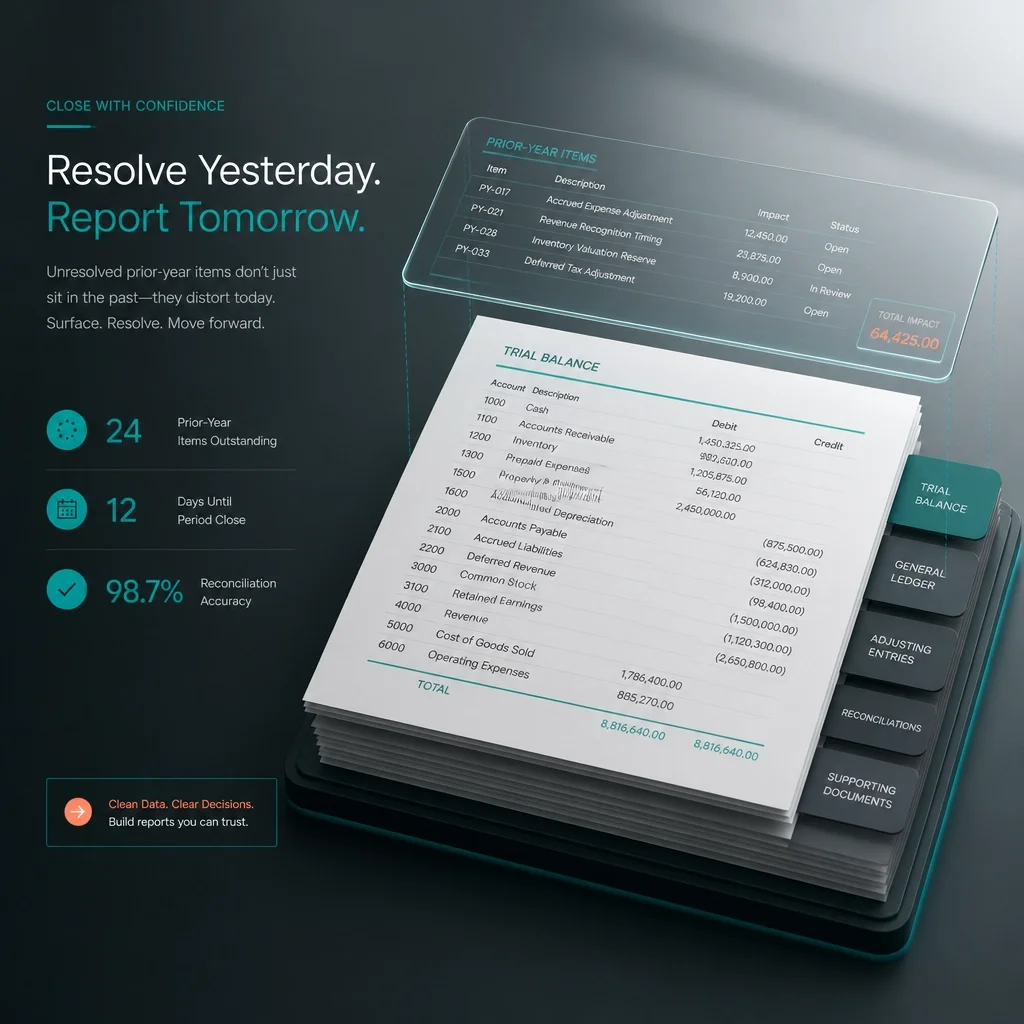
We often call this "Accounting Debt." Just like technical debt in software, accounting debt carries an interest rate. The longer you wait to reconcile those books, the more expensive and painful the clean-up becomes.
The Ripple Effect: Why an Open Year is a Problem
You might think, "It’s just last year, it doesn’t affect today." But in the world of finance, everything is connected. Here is how an unclosed prior year ripples through your business right now:
1. Your Forecasts are Built on Sand
If your prior year isn't closed, your "Beginning Balances" for this year are wrong. If your starting point is off, every single report you run today: your P&L, your cash flow forecast, your budget-to-actuals: is essentially a guess. You’re trying to navigate a ship while the compass is stuck on last year’s heading.
2. The "Clean-Up" Tax
Clean-up isn't just data entry; it's investigative work. A year from now, will you remember what that $4,500 "Miscellaneous" wire transfer was for? Probably not. Your accountant will have to spend hours digging through emails and bank portals to find out. If you close the year while the trail is still warm, it takes a fraction of the time. Waiting until next tax season to fix last year's mess is a recipe for massive clean-up costs.
3. Credibility with Lenders and Investors
If you’re scaling toward $15M, you might be looking for a line of credit, a loan, or even preparing for an exit. When a bank or a potential buyer looks at your books and sees that your prior year hasn't been finalized, it sends a loud signal: This business isn't under control. Clean books are the ultimate sign of a professional operation.
What a "Proper" Year-End Close Actually Looks Like
It’s a common misconception that "closing the books" just means hitting a button in QuickBooks. A real, professional close: the kind led by a controller: is a disciplined process.
It’s the difference between a quick tidy-up and a deep industrial clean. Here’s what we look for:
Full Reconciliations: Every bank account, credit card, loan, and merchant account (like Stripe or Shopify) must match the statements to the penny.
Accrual Adjustments: Making sure revenue and expenses are recorded in the period they actually happened, not just when the cash moved.
A/R and A/P Cleanup: Reviewing who owes you money and who you owe. If there’s an invoice from 14 months ago that was never paid, it needs to be dealt with, not just carried forward forever.
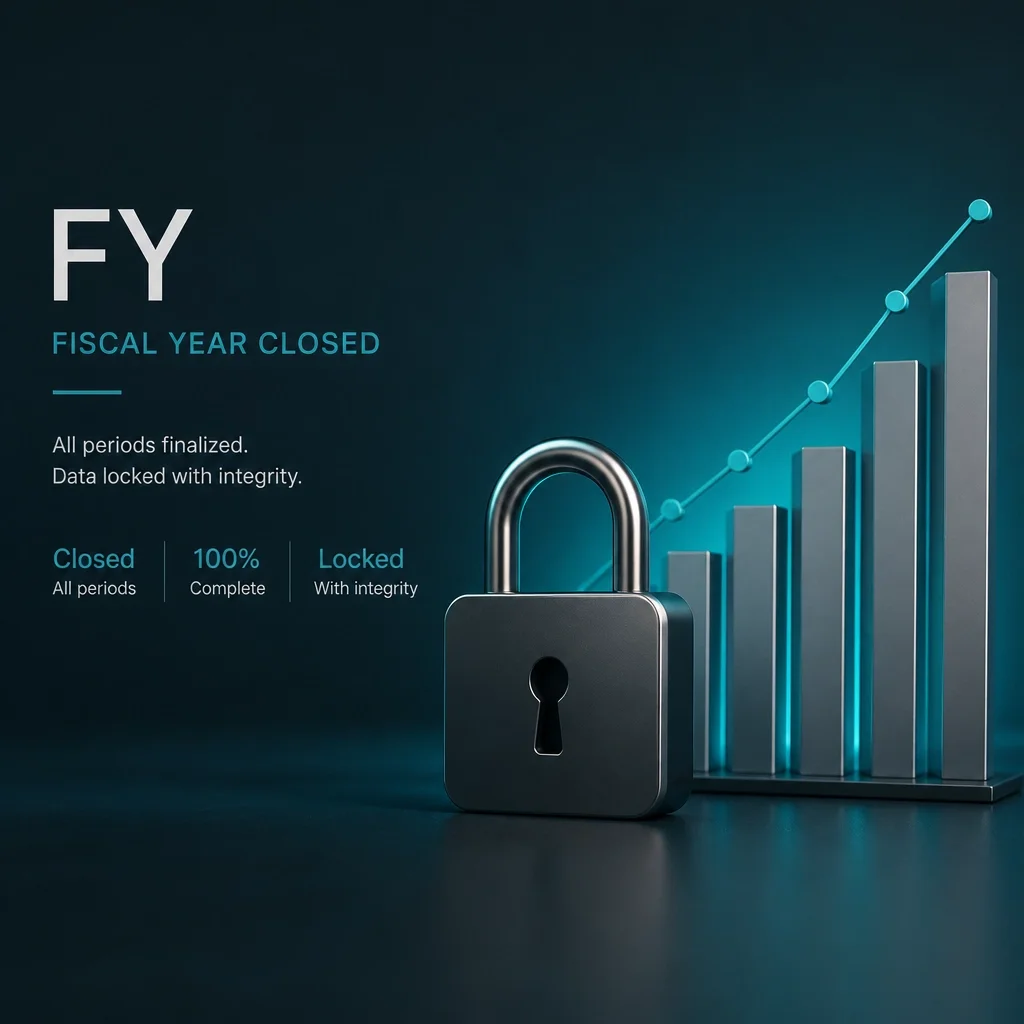
Locking the Period: This is the most important part. Once the books are right, we "lock" them. This prevents anyone (including you!) from accidentally changing a transaction from last year and throwing everything out of balance.
The Controller: Your Guide Through the Fog
This is where the shift from "Bookkeeping" to "Controller Services" happens. A bookkeeper records what happened. A Controller ensures that what was recorded is accurate, compliant, and final.
If you feel like you’re constantly "cleaning up" instead of "moving forward," it’s likely because you’re missing that controller-level oversight. A controller doesn't just ask "What did we spend?" They ask "Why is this still open, and how do we fix the process so it doesn't happen again?"
We’ve written before about the difference between CFOs and Controllers, and nowhere is that distinction clearer than during a year-end close. The Controller is the one who builds the "Closing Calendar" and makes sure everyone: from sales to HR: submits what they need on time.
Why Mid-Year is Your Deadline
If you haven't finalized your prior year by June or July, you are officially in the danger zone.
Why? Because the "current" year is now half-over. You are now managing two separate messes at once. Every day you spend looking backward at last year’s unreconciled transactions is a day you aren't looking forward at your Q3 and Q4 strategy.
Getting that prior year closed isn't just a box to check for the IRS. It’s about mental clarity. It’s about being able to look at your financial dashboard and knowing, with 100% certainty, that the numbers are real.

Moving Forward with Confidence
We know it’s tempting to keep pushing it off. There’s always another fire to put out or another client to sign. But your finances are the foundation of everything you’re building.
If you’re scaling a $5M to $15M business, you deserve better than "ghosts" in your ledger. You deserve a clean break, a locked year, and the peace of mind that comes with knowing your foundation is solid.
The goal isn't just to be "tax-ready": it's to be decision-ready. And you can't be decision-ready if you're still arguing with last year's bank statements.
Let's get those books closed, lock the door on the past, and focus on where you're going next. Together, we can make your financial journey a whole lot smoother.